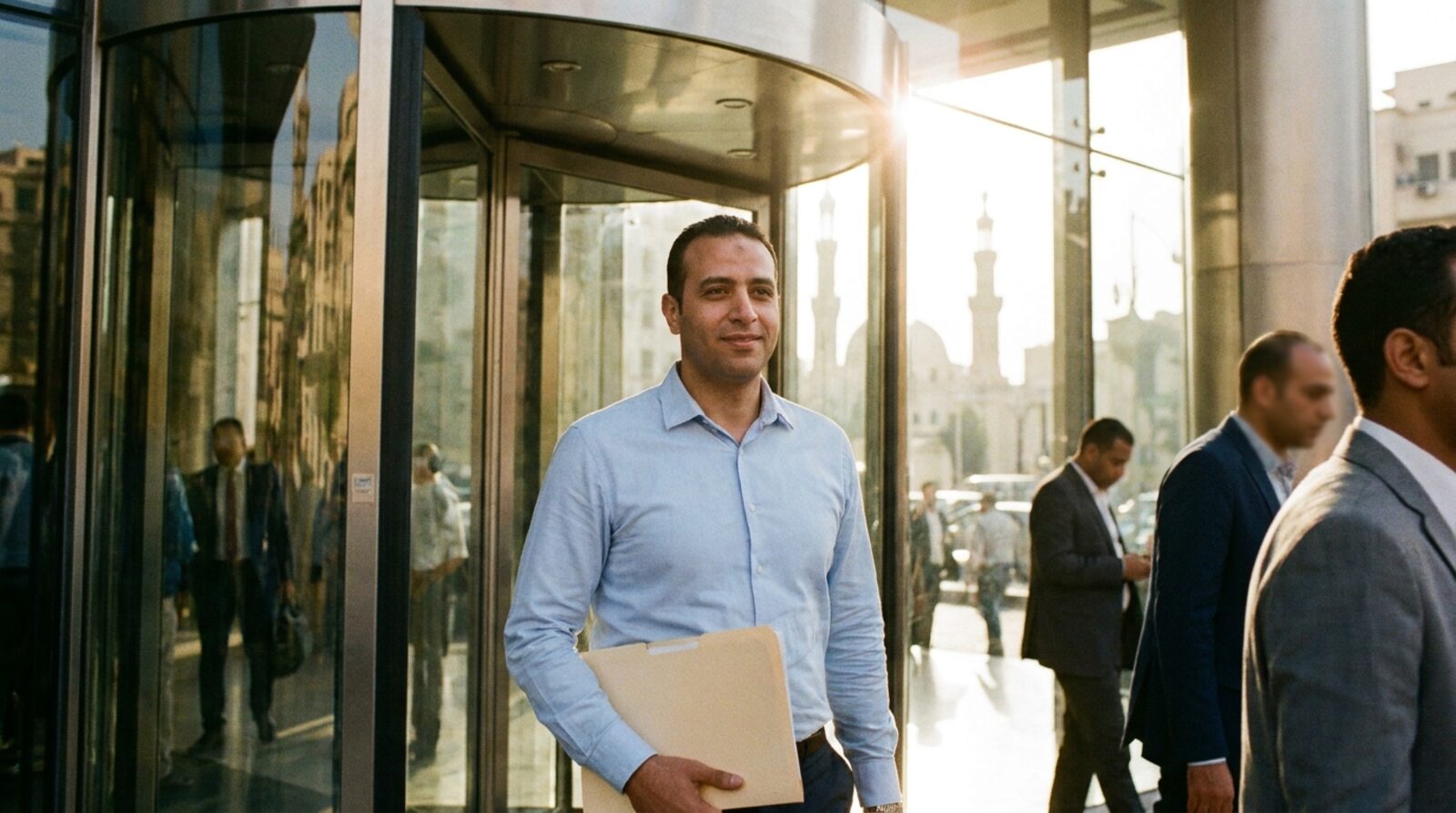
You prepared answers. You wore the right shirt. You still walked out of the first interview unsure what they thought. That gap between what you said and what they were actually judging is where most good candidates lose the job.
A first interview in Egypt is rarely about proving you can do every task on the JD. It's about whether the manager can picture working with you, trusting you, and not regretting the hire in three months. Here's what they're really watching.
Whether you actually showed up prepared
The single fastest way to lose points is not knowing what the company does. Managers here notice it immediately, and they read it as a sign of how you'll treat the actual work.
You don't need deep research. You need enough to sound like you chose them on purpose. Look at their website, their LinkedIn page, a recent post or product launch. If it's a family business or an SME, understand what they sell and who buys it. If it's a multinational's Cairo office, know which market the team serves.
Then connect it back to you: "I saw you're expanding into the Gulf market, and that's the kind of work I want to grow in." That one sentence separates you from half the room.
Can you be relied on to turn up
Egyptian managers worry about this more than they'll admit, because the Cairo commute makes it real. If you live in 6th of October and the office is in New Cairo, they know what that means for a 9am start. If the job needs you on-site daily, expect a question about where you live and how you'll get there.
Don't hide it. Answer it straight. If the commute is long, show you've thought about it: "It's about 70 minutes, I know the route, I'd leave early to beat the Ring Road." That's more reassuring than pretending distance doesn't exist.
And the obvious one: be on time to the interview itself. Traffic is not an excuse anyone in Cairo accepts, because everyone deals with the same traffic. Leave far too early.
How you talk about your last job
They're listening for how you handle the manager or company you left. Trash your old boss and they hear a future problem. Even if the last place was genuinely bad, keep it factual and forward-looking.
Say what you learned and why you're moving, not who wronged you. "I'd taken the role as far as it could go" or "I wanted to move from a small team to a proper structured one" works. Bitterness never does.
Whether your salary expectations are real
You will be asked about money, often earlier than you'd like. This is a filter, not a negotiation yet. They want to know if you're in the same range before they invest more time.
Do your homework so your number isn't a wild guess. Ask people in your field, check job listings for similar roles, and factor in your years of experience and the type of company. A number that's far too high in either direction reads as "doesn't know the market." Give a range, and be ready to explain it.
One practical note: if they ask your current salary, you can share it or you can share your expected range instead. Either is fine. Just don't lie about the current figure, because a background check or an offer letter can expose it.
Your real language level
For a lot of roles here, English matters — sometimes for the work, sometimes for status. If the JD is in English or the company serves foreign clients, expect part of the interview to switch to English without warning. It's a test.
You don't need perfect grammar. You need to be understood and to keep talking without freezing. If your English is shaky, practise saying your own story out loud beforehand: your background, your last role, why you're here. Those are the questions you can guarantee.
Whether you fit the team
Skills get you the interview. Fit gets you the offer. Managers are asking themselves a quiet question the whole time: will this person make my life easier or harder?
That shows up in small things:
- Do you listen, or wait for your turn to talk?
- Do you ask a real question about the role, or just nod?
- Are you calm under a hard question, or defensive?
- Do you treat the receptionist and the junior interviewer the same way you treat the boss? People notice.
- Are you honest when you don't know something, or do you bluff?
Bluffing is the trap. When you don't know, say so and say how you'd find out. Experienced interviewers can smell a made-up answer, and it costs you trust you can't win back in the same meeting.
What to do before you walk in
- Read the company's site and one recent post. Write down one thing you can mention.
- Prepare three stories from real work: a problem you solved, a time you handled pressure, a mistake and what you learned.
- Decide your salary range and one line to justify it.
- Plan the commute and leave enough buffer to arrive 15 minutes early.
- Prepare two questions to ask them — about the role or the team, not about days off.
- Rehearse your own story in English out loud, even if the interview is in Arabic.
Do those six things and you'll walk in as someone who chose this job, not someone hoping any job will do. That difference is exactly what they're watching for — and it's fully in your control.